
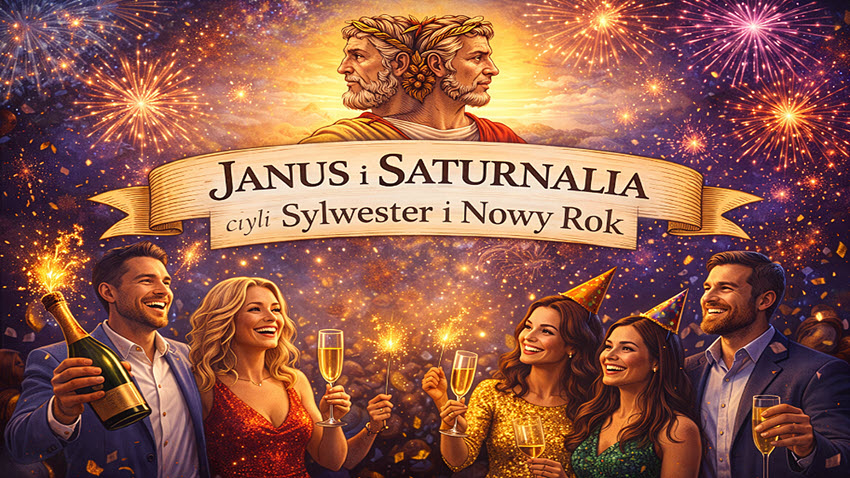
Almost the entire world celebrates New Year’s Eve and New Year’s Day.
Few people wonder what was actually celebrated at that time, where the traditions and customs that were transformed into New Year’s Eve celebrations came from. God did not establish the New Year on December 31st/January 1st. This calendar originates from Rome…
What was worshipped there?
Janus and Saturnalia, which were later transformed into New Year’s Eve celebrations.
I. Janus – the god of „beginnings and transitions”
Who was Janus?
• He was a Roman deity associated with the „thresholds” of life: beginning/end, entry/exit, transition from one stage to another.
• He is a typically Roman cult figure.
• He is depicted with two faces (beginning and end):
◦ one face symbolically „looks” to the past (the end, summary),
◦ the other to the future (future, forecast, plan).
• He is the patron of:
◦ beginnings and endings (closing one cycle and opening another),
◦ gates, doors, passages (in a literal and symbolic sense),
◦ changes of cycles (time, year, projects, stages of life),
◦ „good beginnings” – hence the prayers/offerings at the start of undertakings.
• Janus was invoked at the beginning of activities – he was supposed to „open the way” and ensure success.
• Ianuarius (January) – is the name of the month associated with Janus; it is a „pagan root” of the calendar.
• Roman customs at the turn of the year included actions „for a good start” (wishes, gifts, rituals), interpreted as a form of religious and social „opening” of a new cycle.
• The beginning of the year was historically associated with requests for success addressed to the deities.
• Even if modern man does not think about Janus, the symbolism itself may be connected to this deity.
II. Saturnalia – The Prototype of Celebration
What were the Saturnalia?
• A Roman festival in honor of Saturn, celebrated in December (most often around December 17-23).
• Very popular – perceived as a time of „relaxation,” suspension of normal rules, and social loosening.
What happened then?
• Feasts and revelry – eating, drinking, and feasting on a large scale.
• „Role reversal”:
◦ slaves could sit at the table in a way unusual for everyday life,
◦ costumes, masks, and a „carnival” atmosphere.
• Gambling and risky entertainment – treated as part of the „anything goes” atmosphere.
• Drunkenness – a constant element of Roman festivals.
• Licentiousness – the image of the festival as a period of loosening of moral norms.
• Noise, shouting, night singing – the public, collective nature of the „party”.
Before we move on to the conclusions, let’s look at the verses and consider them:
“But in vain do they worship Me, teaching as doctrines the precepts of men.” – Matthew 15:9.
“Thus says the Lord: Do not learn the way of the gentiles, nor be dismayed at the signs of heaven, though the gentiles are dismayed at them.” – Jeremiah 10:2.
“And do not get drunk with wine, for that is debauchery, but be filled with the Spirit.” – Ephesians 5:18.
“For the time that is past suffices for you to have done the will of the Gentiles, having walked in sensuality, lusts, drunkenness, revelries, drinking parties, and abominable idolatries.” – 1 Peter 4:3.
“Now the works of the flesh are evident: sexual immorality, impurity, sensuality, idolatry, sorcery, enmity, strife, jealousy, fits of anger, rivalries, dissensions, divisions, envy, drunkenness, orgies, and things like these.” – Galatians 5:19–21.
“If anyone wishes to come after Me, let him deny himself, and take up his cross daily, and follow Me.” – Luke 9:23.
“Do not be conformed to this world, but be transformed by the renewal of your mind, that you may prove what the will of God is.” – Romans 12:2.
Where is the problem with these holidays?
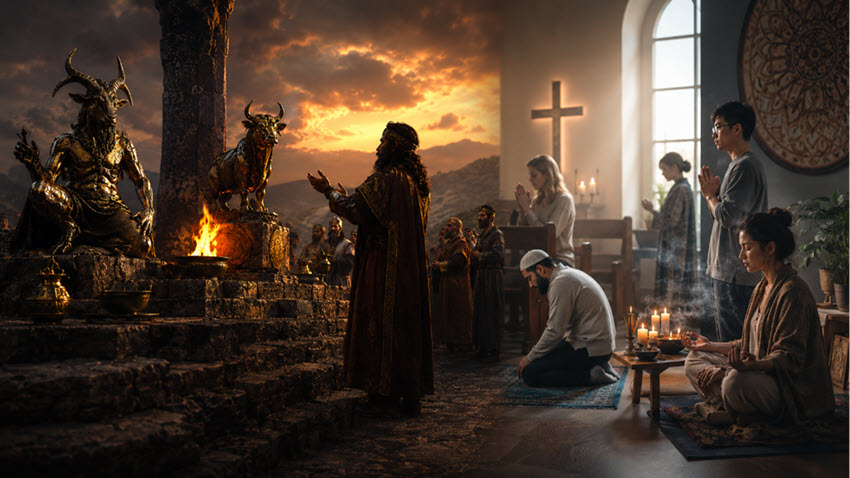
The problem with the holidays of janus and saturnalia, which are the current new year’s eve and new year’s day, is that they were established by people who served foreign gods. They were called pagans. This is an important point, because because the Israelites copied the holidays of the pagans and engaged in fornication/idolatry (worshiping images), God rejected 10 generations and later another two generations.
Partying or drinking alcohol is not forbidden in the Bible. But participating in holidays that honor deities is. Even wearing a mask on your face during a New Year’s Eve party is a form of worshiping a deity, even if we think we are only doing it for fun… in the past, gods were worshiped in this way.
God does not forbid alcohol, dancing, or fun. However, let’s not do it in honor of strange holidays, but let’s organize and establish the dates of our own gatherings. Let it be a beautiful, cheerful, joyful family gathering with friends.
“Go, eat your food with gladness, and drink your wine with a joyful heart, for God has already approved of what you do.” – Ecclesiastes 9:7.
“Let them praise His name with dancing; let them sing praises to Him with tambourine and harp.” – Psalm 149:3.
“Yeshu said to them, ‘Everyone brings out the good wine first, and then the cheaper wine after the guests have had too much to drink; but you have saved the best wine until now.’” – John 2:10.
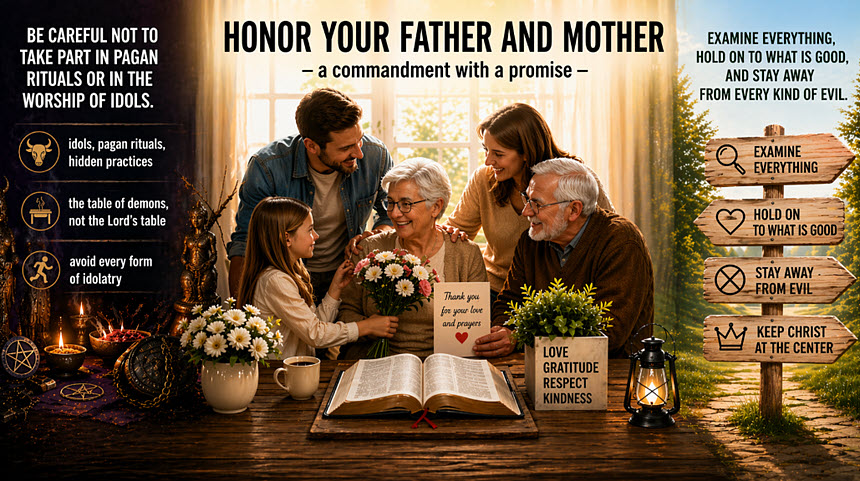
Many people will say: „It’s my decision what I do with my life.” That’s true, we have free will. But… everything we do doesn’t go unnoticed. We will receive a reward or punishment for everything. Let’s remember NOT to participate in idolatry/worship of deities or images. This is a very important commandment. There are severe penalties for worshipping false gods.
The second important thing is that if our conscience allows us to do certain things, we must NOT offend other followers of Christ:
“Beloved, if our hearts do not condemn us, we have confidence before God, and we receive from Him whatever we ask, because we keep His commandments and do what is pleasing in His sight. And this is His commandment: that we believe in the name of His Son, Yeshu Christ, and love one another, just as He commanded us. And whoever keeps His commandments abides in Him, and He in him. And by this we know that He abides in us, by the Spirit whom He has given us.” – 1 John 3:21-24.
In reality, it all depends on our conscience, our awareness, and our beliefs, provided that we do not break God’s commandments.
“All things are lawful, but not all things are helpful; all things are lawful, but not all things build up. Let no one seek his own good, but the good of his neighbor. Eat whatever is sold in the meat market without raising any question on the ground of conscience—for “the earth is the Lord’s, and the fullness thereof.” If one of the unbelievers invites you to a meal and you are disposed to go, eat whatever is set before you without raising any question on the ground of conscience. But if someone says to you, “This has been offered in sacrifice to idols,” do not eat it, for the sake of the one who informed you, and for the sake of conscience—I mean not your own conscience, but the other person’s. For why should my freedom be judged by someone else’s conscience? If I partake with thankfulness, why am I denounced because of that for which I give thanks? So, whether you eat or drink, or whatever you do, do all to the glory of God. Give no offense to Judeans or to Greeks or to the church of God, just as I try to please everyone in everything I do, not seeking my own advantage, but that of many, that they may be saved.” – 1 Corinthians 10:23-33.
I encourage you to read other verses on this topic:
Communions – Weddings – Holidays. When is it a Sin against the Holy Spirit?
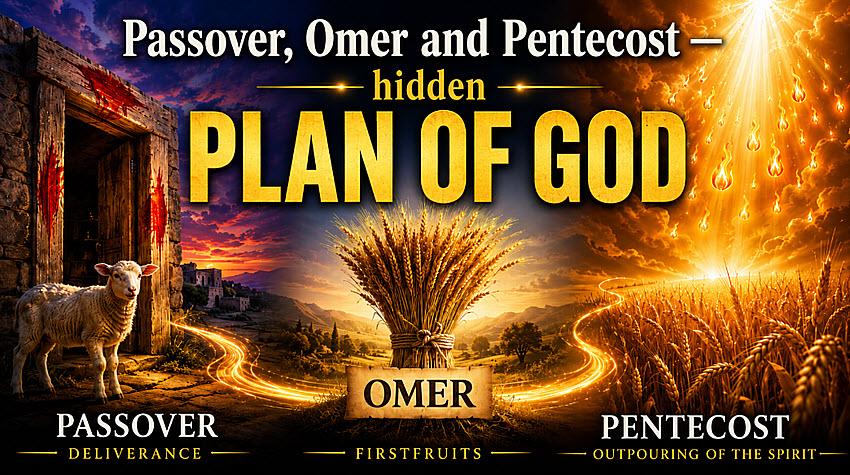
God established the new year at the turn of the current March-April. The 14th of Aviv, the 14th day of the first month of the year, is the most important holiday for Christians, for the servants of Christ:
https://jesu.pl/passover-unleavened-bread-the-memorial-is-this-all-one-holiday/











Zapraszam do komentowania, wyrażania swojej opinii: