
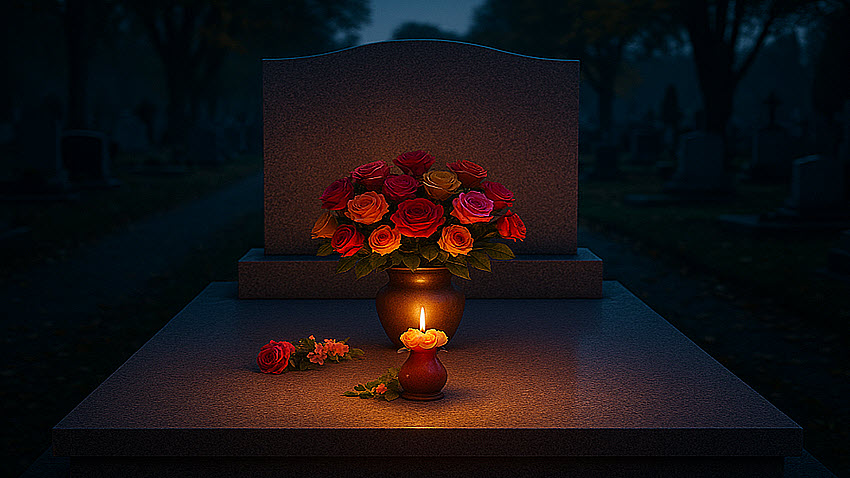
Let’s explore a very interesting topic:
Does lighting candles on the graves of the deceased have any Biblical justification?
Let’s look at the verses.
In the Old Testament, are there any examples of lighting candles for the dead?
„The Israelites are to bring you pure olive oil, pressed from crushed olives, so that the lampstand may burn continually.” – Exodus 27:20-21.
The purpose of lighting the candles was:
• to provide light before the face of God YHWH,
• to represent continuous priestly service,
• to symbolize God’s presence.
Other verses:
“Every morning Aaron shall burn fragrant incense on it, when he prepares the lamps to burn. And when Aaron lights the lamps at twilight, he shall also burn incense, which shall be burned continually before YHWH throughout your generations.” – Exodus 30:7–8.
“Let the lampstand… burn continually…” – Leviticus 24:2–4.
Lamps, lights, and candles were lit for God.
Let’s examine funerals in the Old Testament:
Not once at the funerals of:
• Abraham,
• Jacob,
• Joseph,
• Moses,
• Samuel,
• David,
• Hezekiah,
— did anyone light a lamp or place candles at their graves.
There is no practice of lighting candles „for the dead” in the Old Testament.
The New Testament – were candles lit at the grave?
The New Testament is even more unambiguous: there is not a single instance of lighting a candle at a grave or „for the soul.”
Death and burial in the New Testament:
• John the Immersionist/the Immerser,
• Lazarus,
• Ananias and Sapphira,
• Stephen,
• Tabitha/Dorcas,
do not provide any case or example of lighting candles for the dead.
The New Testament describes funerals very simply:
• wrapping the body,
• fragrances,
• burial in a tomb or cave,
• lamentation.
Incense
We have some very interesting examples of the non-biblical use of another form of candles, namely incense.
Let’s see.
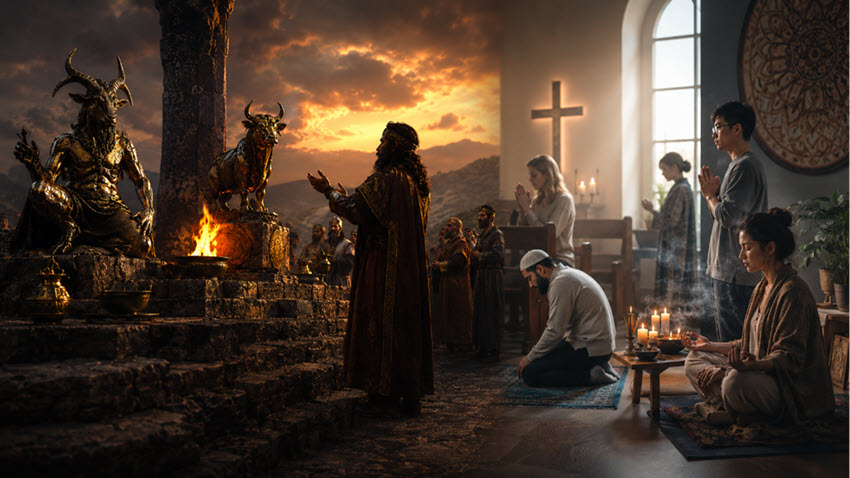
Incense for baal and the „heavenly host”:
„He removed the idolatrous priests whom the kings of judah had appointed to burn incense on the high places in the towns of judah and in the area around Jerusalem—those who burned incense to baal, to the sun, to the moon, to the constellations, and to all the starry hosts.” – 2 Kings 23:5.
Incense offered on the high places „like the nations” (imitation of other nations):
„And they burned incense in all the high places, in all the shrines, just as the nations whom the Lord had driven out before them had done; and they committed wicked acts, provoking the Lord to anger.” – 2 Kings 17:11
Incense offered to „heavenly hosts” and sacrifices to foreign gods:
“And the houses of Jerusalem and the houses of the kings of judah will be defiled like the place of Topheth—all the houses on whose roofs they burned incense to all the host of heaven and poured out drink offerings to other gods”—Jeremiah 19:13.
Incense of the „queen of heaven”:
„We will certainly do everything we vowed to do, and we will burn incense to the queen of heaven and pour out drink offerings to her, just as we and our fathers, our kings and our princes did in the cities of Judah and in the streets of Jerusalem. At that time we had plenty of food, we were prosperous, and we experienced no misfortune.” – Jeremiah 44:17
Incense on the mountains and under the trees (the cult of places and „shadows”):
„They offer sacrifices on the mountaintops and burn incense on the hills, under the oak, the poplar, and the terebinth, because their shade is pleasant. Therefore your daughters commit prostitution, and your young women commit adultery.” – Hosea 4:13
Incense offered to foreign gods in the king’s house:
„He did the same for all his foreign wives, who burned incense and offered sacrifices to their gods” – 1 Kings 11:8.
Glossary of names:
• Baal – title/name of Canaanite deities; in the Bible, a shorthand for a foreign cult competing with God.
• Asherah – a symbol associated with a foreign cult (often a pillar/”sacred grove”) next to which sacrifices were offered.
• „Host of heaven” – celestial bodies/from heaven (sun, moon, stars) worshipped as deities.
• „queen of heaven” – a term for a worshipped female deity; the Bible treats this cult as apostasy.
• Tophet – a place associated with shame and judgment; an image of desecration through idolatry.
How can we summarize this?
The Scriptures say not to go beyond what is written, not to add any beliefs to the teachings of Christ. And there is no information in the Biblical scriptures about burning candles for the dead. God’s servants did not do such things.
Since such practices are not found in the Scriptures, where did this tradition come from?
In the past, sacrifices were offered to idols and incense was burned. Today, candles are burned.
Have you ever wondered, reader, why this is done?
How is this candle supposed to help the dead?
It doesn’t…
However, it can be a dangerous custom that falls under these prohibitions:
“Let no one be found among you… who practices divination or sorcery, or who consults the dead. For whoever does these things is an abomination to YHWH.” – Deuteronomy 18:10–12.
“Do not turn to mediums or spiritists; do not seek them out, to be defiled by them. I am the Lord your God.” – Leviticus 19:31.
Isn’t lighting candles „for the soul” a form of ritual directed towards the deceased, even if only symbolically?
“Should not a people inquire of their God? Why consult the dead on behalf of the living?” – Isaiah 8:19.
1. The Bible doesn’t command the lighting of candles for the dead.
2. Most often, candlesticks in the Bible were lit for God, not for people after death.
3. There is not a single example of a candle on a grave in the Scriptures.
4. Light in the Bible symbolizes God’s presence, truth, and spiritual enlightenment, not the commemoration of the dead.
5. All rituals directed „to the dead” (even symbolically) are considered forbidden acts in the Bible.
What does light symbolize in the New Testament?
“Let your light shine before others, that they may see your good deeds and glorify your Father in heaven.” – Matthew 5:16.
“I am the resurrection and the life. The one who believes in Me will live, even though they die.” – John 11:25.
“Brothers and sisters, we do not want you to be uninformed about those who sleep in death, so that you will not grieve like the rest of mankind, who have no hope.” – 1 Thessalonians 4:13.











Zapraszam do komentowania, wyrażania swojej opinii: