
1 – What is the Memorial of Christ’s death?
The Memorial of Christ’s death is the most important holiday of the year for every Christian, for every person who serves God. If we look at holidays in terms of what the Bible says, it is the only holiday God commanded. Other holidays celebrated by religions and the world are invented by humans; they have nothing to do with God’s commandments.
It’s worth realizing this basic Biblical fact. Many people follow tradition and religion and are not interested in the Bible. For them, what the world says, what the major religions say, and what their immediate family imposes, is most important.
Others, seeing the falsehood of world religions, think that God established it, and therefore their faith weakens. The truth is different. Religions invent holidays and commandments that are not found in Christ’s teachings.
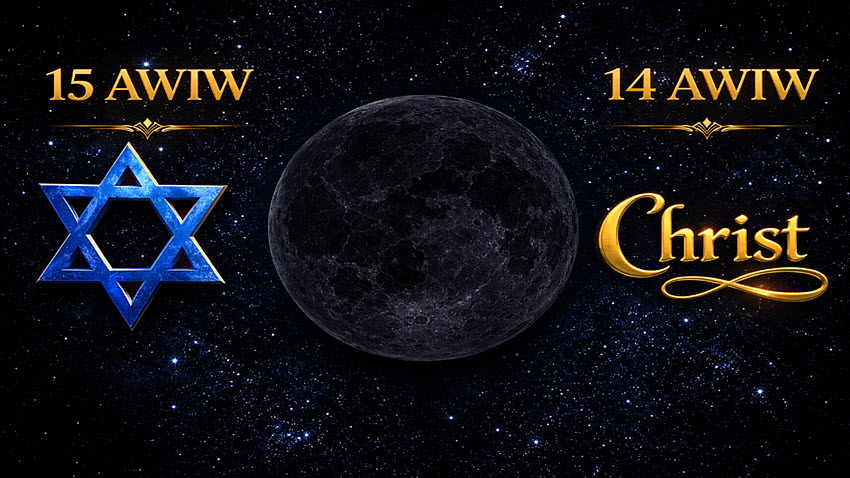
One of these truths is the most important holiday for us, the Memorial of Christ’s death. Previously, it was called Passover. Christ changed Passover to the Memorial. One of the most important aspects of this holiday is calculating the date correctly. God has given us a very precise date: the 14th of Aviv after sunset, between two evenings.
Let us now discuss many issues to debunk myths and lies and leave the truth. If God has given us a specific date, it means it is important, so we should be unanimous on this matter and calculate it correctly. Then, we can celebrate this great holiday with dignity.
We have many issues, so let’s begin the first part.
2 – The day starts NOT at 12 midnight, but in the evening.
2.1 – God established the “day” this way:
“And there was evening, and there was morning—one day” – Genesis 1:5.
Conclusion: The day consists of evening and morning, in that order.
2.2 – The day begins with evening:
“Now the earth was formless and empty, and darkness was over the surface of the deep” – Genesis 1:2.
Conclusion: Darkness and evening were before the light.
2.3 – The light does not begin the day:
“And God called the light Day, and the darkness He called Night” – Genesis 1:5.
Conclusion: Night and day form one day.
2.4 – “Evening and morning” constitute a full day:
“And there was evening, and there was morning—the second day” – Genesis 1:8.
Conclusion: This is a constant pattern established by God.
2.5 – Morning does not begin the day:
“And there was evening, and there was morning” – Genesis 1:5.
Conclusion: Morning completes the day that began in the evening.
2.6 – The same principle applies in the Law:
„From evening to evening you shall keep your Sabbath” – Leviticus 23:32.
Conclusion: The Sabbath began in the evening.
2.7 – Application to Passover and Memorial:
„In the first month, on the fourteenth day of the month, between the evenings is the Passover to YHWH” – Leviticus 23:5.
Conclusion: The 14th day of the month begins in the evening.
2.8 – Confirmation in the words of the Lord Yeshu:
„I have earnestly desired to eat this Passover with you before I suffer” – Luke 22:15.
Conclusion:
• The Passover/Memorial of Christ took place in the evening after sunset.
• God counts the day: from evening → morning → day → to evening.
3 – The first month is – 1 Aviv
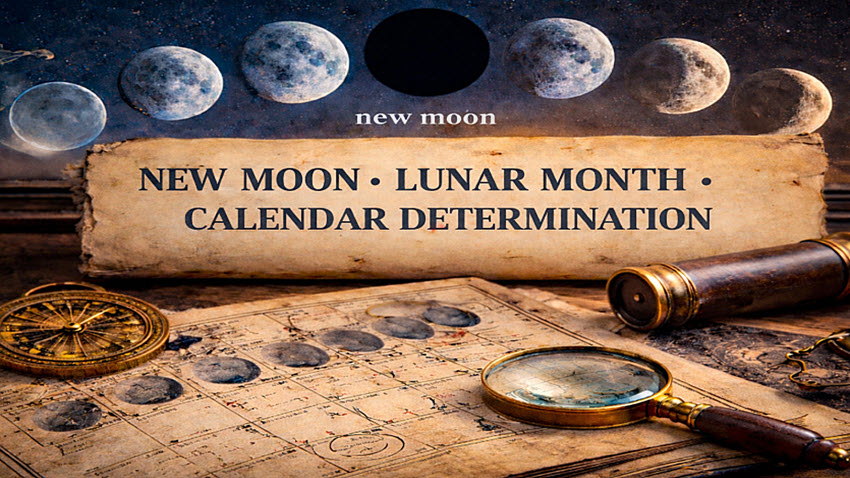
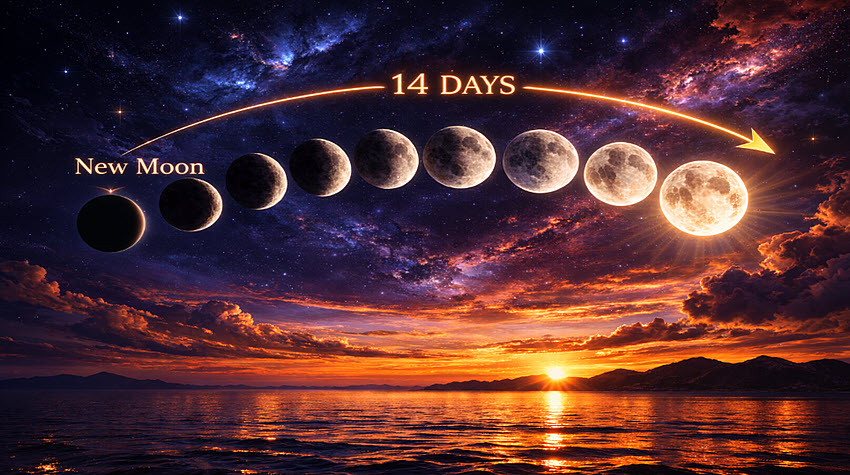
3.1 – The month marks the new moon, it is related to the lunar cycle:
“Blow the trumpet at the new moon (chôdesh, Strong’s H2320), at the full moon, on the day of our feast” — Psalm 81:4.
“At the beginning of your new moons (chôdesh, Strong’s H2320) you shall blow the trumpets over your burnt offerings and over the sacrifices of your peace offerings; and they shall be a memorial to you before your God” — Numbers 10:10.
From this it follows that:
• months begin with a new moon,
• the beginning of the month was publicly announced (trumpets),
• the word „month” is translated in Bible translations as „month.” And this word, with the number Strong’s 2320, also means „new moon”:
חֹדֶשׁ – chodesh – Strong’s H2320 month, new moon:
• new, renewed,
• month,
• new moon (as the beginning of the month),
• month as a unit of time,
• the beginning of the month marked by the new moon,
• lunar cycle.
3.2 – The new moon is a sign of the beginning of the month:
„And on the day of the new moon (chôdesh, Strong’s H2320) you shall offer burnt offerings to YHWH” – Numbers 28:11.
Sacrifices are offered „on the day of the new moon.”
3.3 – God established the first month of the year.
a – the first month:
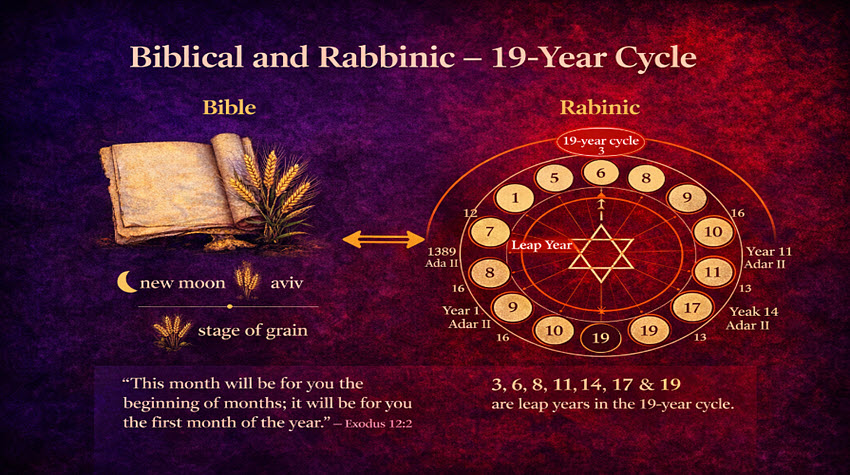
„This month (chôdesh, Strong’s H2320) shall be the beginning of months for you; it shall be the first of the months of the year for you” – Exodus 12:2.
b – God gives the name of the month:
„Today you go out, in the month (chôdesh, Strong’s H2320) Aviv” – Exodus 13:4.
„Today you go out” → the same time as the Passover in Exodus 12:2. This is the same month that was called „the first month” in Exodus 12:2, but here it is called Aviv.
c – determining the date of Passover. Without correctly determining the 1st of Aviv, we will not be able to correctly determine the 14th:
„In the first month, on the fourteenth day of the month, at evening, you shall eat unleavened bread until the evening of the twenty-first day of the month.” – Exodus 12:18.
„In the first month/new moon (chôdesh, Strong’s H2320), on the fourteenth day of the month, between the two evenings, is the Passover to YHWH. And on the fifteenth day of the month/new moon (chôdesh, Strong’s H2320) is the Feast of Unleavened Bread to YHWH; for seven days you shall eat only unleavened bread.” – Leviticus 23:5-6.
There are two time phrases in Hebrew: „in the evening” and „between the two evenings” (the time of twilight). Let’s analyze when the Passover meal was to be eaten.
Legend:
„between two evenings” = Hebrew bên hā-‘arbayim;
„in the evening” = Hebrew bā‘ereḇ;
without mention of time = the day itself (the 14th day of the 1st month).
(Working translation, literal from the interlinear.)
|
Number |
Contents (ENG) |
Time in the text |
|---|---|---|
|
1 |
“It shall be kept with you until the fourteenth day of this month, and the whole assembly of the community of Israel shall kill it between the evenings.” – Exodus 12:6 | between two evenings
Hebrew: bên hā-‘arbayim |
|
2 |
“In the first month, on the fourteenth day of the month, between the two evenings, is the Passover to YHWH” – Leviticus 23:5. | between two evenings
Hebrew: bên hā-‘arbayim |
|
3 |
“On the fourteenth day of this month, between the two evenings, you shall keep it at its appointed time; according to all its statutes and according to all its ordinances you shall keep it.” – Numbers 9:3 | between two evenings
Hebrew: bên hā-‘arbayim |
|
4 |
“And they kept the Passover in the first month, on the fourteenth day of the month, between the evenings, in the wilderness of Sinai, according to all that YHWH had commanded Moses” – Numbers 9:5. | between two evenings
Hebrew: bên hā-‘arbayim |
|
5 |
“In the first month, on the fourteenth day of the month, at evening, you shall eat unleavened food until the twenty-first day of the month at evening” – Exodus 12:18. | in the evening
Hebrew: bā‘ereḇ |
|
6 |
“And the children of Israel encamped at Gilgal, and kept the passover on the fourteenth day of the month at evening in the plains of Jericho.” Joshua 5:10 | in the evening
Hebrew: bā‘ereḇ |
|
7 |
“In the first month, on the fourteenth day of the month, is the Passover to YHWH” – Numbers 28:16. | no mention of time |
|
8 |
“And the children of the captivity kept the Passover on the fourteenth day of the first month” – Ezra 6:19. | no mention of time |
|
9 |
“Josiah kept the Passover to YHWH in Jerusalem, and they slaughtered the Passover on the fourteenth day of the first month” – 2 Chronicles 35:1. | no mention of time |
|
10 |
“In the first month, on the fourteenth day of the month, shall be the Passover: a feast of seven days: it shall be unleavened.” – Ezekiel 45:21. | no mention of time |
New Covenant/New Testament
(Working translation, literal; here the name „Aviv” is no longer there, but it is directly: „prepare/eat the Passover”).
• “On the first day of Unleavened Bread, the disciples came to Yeshu, saying, ‘Where do you want us to prepare for You to eat the Passover?’” – Matthew 26:17.
• “The disciples did as Yeshu commanded them and prepared the Passover.” – Matthew 26:19.
• “On the first day of Unleavened Bread, when they were killing the Passover, His disciples said to Him, ‘Where do You want us to go and prepare for You to eat the Passover?’” – Mark 14:12.
• “So they went out and came into the city and found it just as He had told them, and they prepared the Passover.” – Mark 14:16.
• “And when evening had come, He came with the twelve” – Mark 14:17.
• “The day of Unleavened Bread came, when it was time to kill the Passover” – Luke 22:7.
• “And He sent Peter and John, saying, Go, prepare the Passover for us, that we may eat it” – Luke 22:8.
• “And when the hour had come, He took his place at the table, and the apostles with Him” – Luke 22:14.
• “And He said to them, ‘I have earnestly desired to eat this Passover with you before I suffer.’” – Luke 22:15.
• “Purge out the old leaven, that you may be a new lump… for our Passover, the Messiah (Yeshu), has been sacrificed” – 1 Corinthians 5:7.
Conclusion:
The Israelites were to eat the Passover meal in the evening/between two evenings. Christ ate the Passover meal in the evening, and this time serves as a model for us. We copy the celebration Christ celebrated with His disciples. For us, the Israelites’ Passover meal is merely a supplement to our knowledge.
How do we pronounce the name of the first month?
• אָבִיב – ʼĀvîv
• spelling: אביב
• approximate pronunciation: aviv / aviv
• meaning: young ear of grain, green grain, ripening stage of barley.
The Hebrew letter ב (bet) has two pronunciations:
• בּ (bet with dagesh) → b
• ב (bet without dagesh) → w / v
In the word אביב:
• the letter bet has no dagesh,
• so it is not read as „b.”
Correct pronunciation: aviv (or aviv). Some pronounce this word as abib. The form „abib” comes from Latin and English transliterations, does not correctly reflect the Hebrew pronunciation, and is preserved in older translations (e.g. KJV).
3.4 – The moon is used to determine the seasons:
„He made the moon to mark the seasons” – Psalms 104:19.
Months (monthly seasons) are measured by the movement of the moon, so the start of the month comes from its cycle.
3.5 – The Lord Yeshu confirms the meaning of this calculation through the Passover:
“I have earnestly desired to eat this Passover with you before I suffer” – Luke 22:15.
The memorial of the Lord Yeshu’s death is linked to Passover; Christ celebrates Passover with His disciples. He then changes the Passover holiday to a celebration of the Memorial of His death.
The new moon is the basis for determining 1 Aviv, because God established the heavenly bodies as signs of time, and the moon determines the monthly seasons. This determines the correct determination of the 14th day of the first month, Passover, and thus the Memorial of the Lord Yeshu’s death.
From this point on, we know that the first month was called Aviv. The word that the Bible translations translate as „month” also means new moon. Each subsequent month began with a new moon. The Israelites used a lunar calendar.
In the next article in this series, we will discuss the Israelites’ lunar calendar, the holidays associated with Passover, and the correct calculation of 1 Aviv. How was it determined? When is the new moon? 0% or a crescent? Two ways to count the date of the Memorial: day 0 – day 1. Which is correct?
Enjoy!





Zapraszam do komentowania, wyrażania swojej opinii: